Archives
- 2026-04
- 2026-03
- 2026-02
- 2026-01
- 2025-12
- 2025-11
- 2025-10
- 2025-09
- 2025-03
- 2025-02
- 2025-01
- 2024-12
- 2024-11
- 2024-10
- 2024-09
- 2024-08
- 2024-07
- 2024-06
- 2024-05
- 2024-04
- 2024-03
- 2024-02
- 2024-01
- 2023-12
- 2023-11
- 2023-10
- 2023-09
- 2023-08
- 2023-07
- 2023-06
- 2023-05
- 2023-04
- 2023-03
- 2023-02
- 2023-01
- 2022-12
- 2022-11
- 2022-10
- 2022-09
- 2022-08
- 2022-07
- 2022-06
- 2022-05
- 2022-04
- 2022-03
- 2022-02
- 2022-01
- 2021-12
- 2021-11
- 2021-10
- 2021-09
- 2021-08
- 2021-07
- 2021-06
- 2021-05
- 2021-04
- 2021-03
- 2021-02
- 2021-01
- 2020-12
- 2020-11
- 2020-10
- 2020-09
- 2020-08
- 2020-07
- 2020-06
- 2020-05
- 2020-04
- 2020-03
- 2020-02
- 2020-01
- 2019-12
- 2019-11
- 2019-10
- 2019-09
- 2019-08
- 2019-07
- 2019-06
- 2019-05
- 2019-04
- 2018-11
- 2018-10
- 2018-07
-
The ubiquitin like modifier NEDD NEURAL PRECURSOR CELL EXPRE
2020-09-28
The ubiquitin-like modifier NEDD8 (NEURAL PRECURSOR CELL EXPRESSED, DEVELOPMENTALLY DOWN-REGULATED 8) uses similar enzymatic machineries for NEDD8 conjugation as ubiquitin (Figure 1) [11, 12, 13, 14]. In plants as well as in other eukaryotes, the number of E3 ligases for NEDD8 and the number of know
-
Likewise the conserved cysteine in
2020-09-28
Likewise, the conserved cysteine in the E2 protein is the only residue shown to be essential for the transfer of Ub/Ubl from E2 to the HECT ligases (Dye and Schulman, 2007, Wu et al., 2003). However, all other terminal Ub/Ubl transfer reactions involving E2 enzymes suggest a critical role for the ta
-
Introduction Rotavirus RV a member of
2020-09-27
Introduction Rotavirus (RV), a member of Reoviridae family, is a non-enveloped virus which has a double-stranded RNA genome of 11 segments surrounded by three concentric protein layers. It has been reported to cause estimated 25% of moderate-to-severe illnesses (Kotloff et al., 2013) and 30% of tot
-
br Protein acetylation Several reports show that MTX is able
2020-09-27
Protein acetylation Several reports show that MTX is able to induce acetylation of histones and other proteins. Extensive studies have established that histone acetylation is primarily associated with gene activation. Acetylation occurs at lysine residues on the amino-terminal tail of the protein
-
Recently Schenck et al identified an
2020-09-27
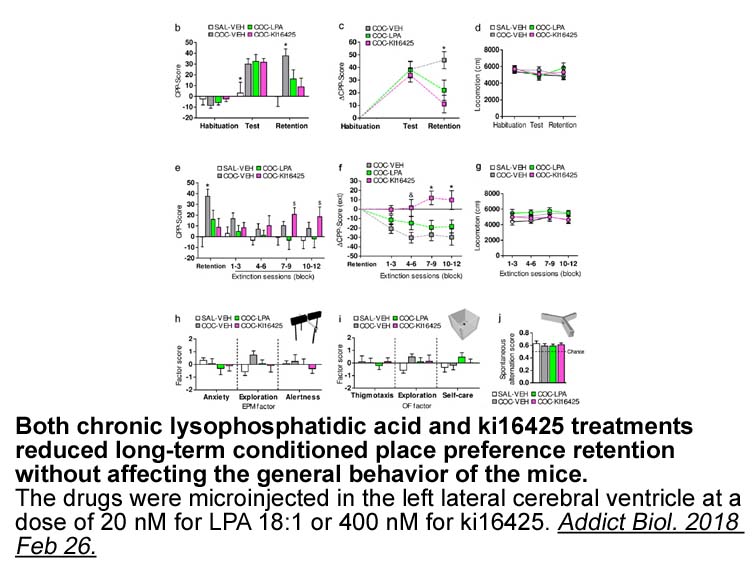
Recently, Schenck et al. [25] identified an active site asparagine 222 (N222) residue in the Glycine max TyrAp/PDH (GmPDH1) that is responsible for its prephenate substrate specificity. Mutating the single N222 into an acidic residue (i.e. aspartate, D) in the legume TyrAp/PDH shifted from prephenat
-
To further determine the cell
2020-09-27
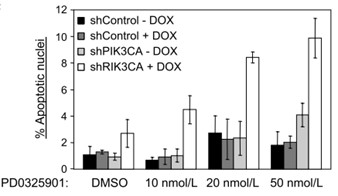
To further determine the cell death, the ML133 HCl sale in flasks were harvested after OGD or LTD4 treatment, washed twice with PBS, and evaluated with Annexin V (AV)-FITC apoptosis detection kit I (BD Biosciences Pharmingen, USA) on a flow cytometer (FACSCalibur, Becton–Dickinson, USA). Briefly, 10
-
br Conclusions The present study
2020-09-27
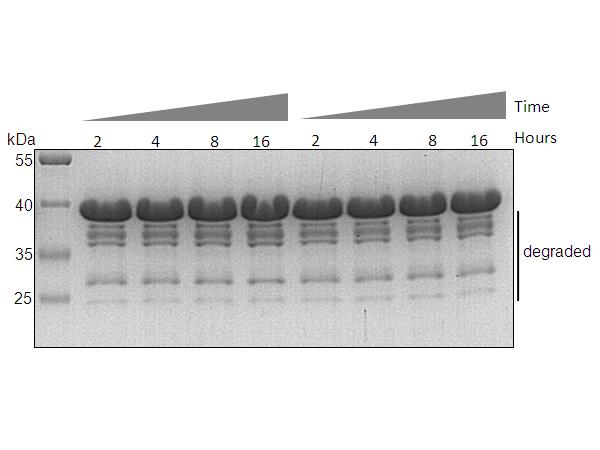
Conclusions The present study demonstrated that CuE possesses strong hepatotoxicity. CuE is not only a mechanism-based inhibitor of human CYP3A4, but also inhibits P-gp activity in vitro. In whole animal studies, CuE induces CYP3A and P-gp after a long-term treatment but inhibits the activities o
-
We and others have previously found
2020-09-27
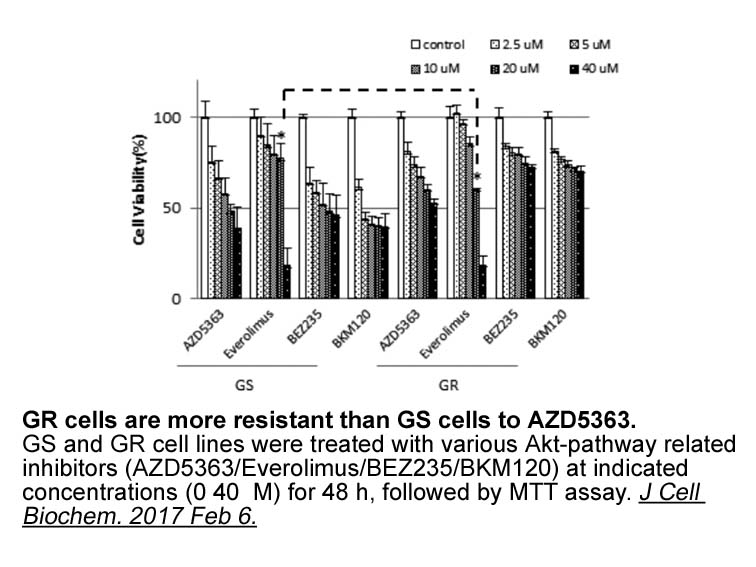
We and others have previously found that supplementation of old rats with ALCAR remediates the age-related decay in mitochondrial bioenergetics in liver (Hagen et al., 1998a, Hagen et al., 1998b), heart (Paradies et al., 1994, Paradies et al., 1999), muscle (Pesce et al., 2010) and Nitazoxanide (Li
-
Neuroinflammation is the one of the emerging causal factors
2020-09-27
Neuroinflammation is the one of the emerging causal factors contributing to these cognitive deficits. Therefore, we further tested the hypothesis that neuroinflammation is a key component contributing to the progression of spatial memory deficits during HH. Spatial memory deficits were observed afte
-
The availabilities of serotonin and
2020-09-27
The availabilities of serotonin and dopamine are modulated by the serotonin transporter and catechol-O-methyltransferase enzyme. The serotonin transporter (5-HTT) is a key protein that reuptakes serotonin from the synaptic cleft back into synaptic boutons (Coleman et al., 2016; Talvenheimo et al., 1
-
br Activatable MRI probes MRI is
2020-09-25

Activatable MRI probes MRI is commonly used in clinics around the world and has the advantages of outstanding tissue-penetration depth and extremely high spatial resolution for in vivo imaging [33]. MRI has relatively poor sensitivity and usually requires clozapine-n-oxide agents to enhance the i
-
br Cytochrome P monooxygenases Cytochrome P monooxygenases
2020-09-25

Cytochrome P450 monooxygenases Cytochrome P450 monooxygenases (P450s) belong to one of Nature’s most versatile group of enzymes for C–H functionalization and are able to perform challenging regioselective and stereoselective activations of remote, unactivated C(sp3)–H bonds, for which there are o
-
Gupta et al have shown that
2020-09-25
Gupta et al have shown that a genetic variant associated with the 5 vascular diseases (coronary artery disease, migraine, carotid artery dissection, fibro-muscular dysplasia, and hypertension) is a distal regulator of the ET-1 gene [30]. They found that a single nucleotide polymorphism (SNP) located
-
Hyaluronic acid HA also called
2020-09-25
Hyaluronic H-9 dihydrochloride (HA), also called hyaluronan is widely distributed in Extra Cellular Matrix of soft connective tissues including skin, umbilical cord and synofial fluid (Hanamura et al., 2008). Hyaluronic acid has a unique ability to hold 6000mL of water in 1mg of HA and plays an imp
-
When six chemical inhibitors were
2020-09-25
When six chemical inhibitors were incubated with TRB or TRC and human liver microsomal preparation, HLM2, the results showed that ketoconazole (a CYP3A4 inhibitor) was very effective in inhibiting 4β-C hydroxylation of TRB and TR, whereas sulfaphenazole (a CYP2C9 inhibitor) and quinidine (a CYP2D6 i
16614 records 814/1108 page Previous Next First page 上5页 811812813814815 下5页 Last page